
A family burial ground that became a parish cemetery, and then a landscape worth preserving.
A timeline
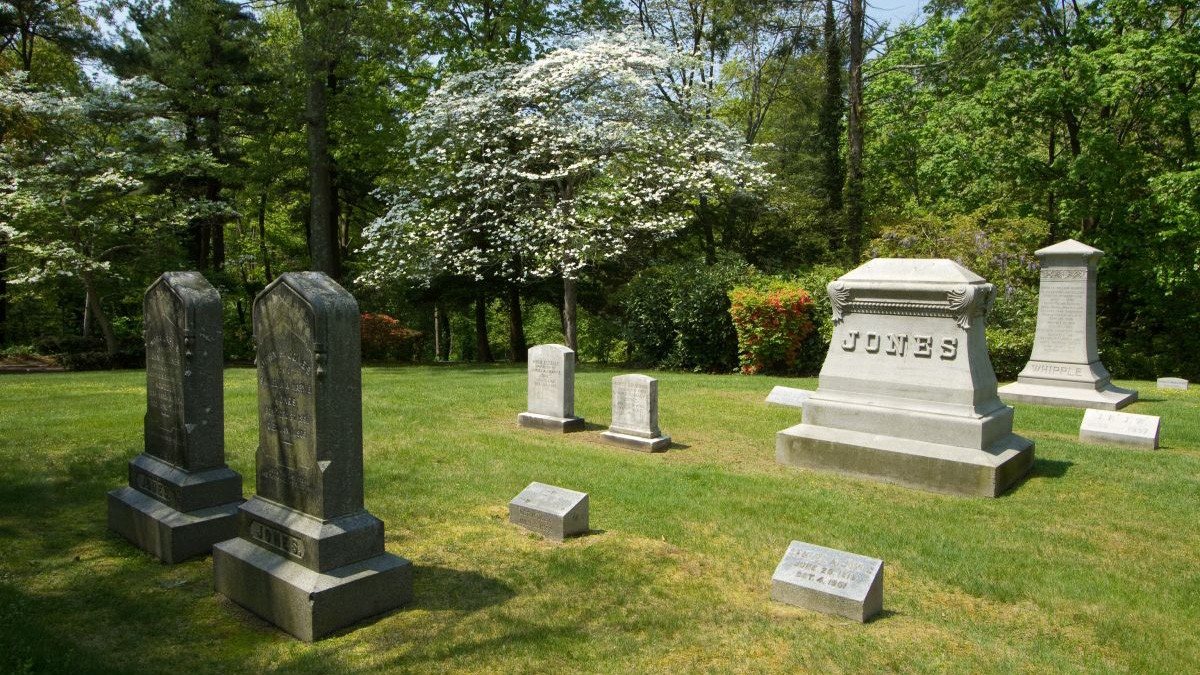
- 1862John Divine Jones founded the cemetery on wooded, steep-sided land. He had meant it as a burial ground for his family; it became the cemetery for the people of St. John’s Episcopal Church, replacing an earlier burying ground above the church. The first graves lay on the high ground in the northeast, near where the Jones family plot stands today.
- By 1890A small chapel stood near the Jones graves by the entrance.
- 1912Robert and Henry De Forest bought about ten acres to the west, the parcel to the west that was later added to the cemetery.
- 1918After fifty-six years of burials, St. John’s turned to the Olmsted Brothers, the Brookline, Massachusetts landscape architects, for advice. A civil engineer, H. C. Harrington, first surveyed the grounds, about 34 acres at that time.
- 1921The Olmsted Brothers’ Preliminary Plan set out the drives, paths, parks, and wooded edges that still shape the cemetery. Over the following decades the firm also designed individual plots for families.
- 1947–58New sections were laid out on the slopes. The plots here are smaller, a change from the large family rooms of earlier years.
- 2018–19The cemetery committee commissioned Heritage Landscapes, preservation landscape architects, to study the Olmsted record and recommend how to care for the grounds. They found the cemetery to be a significant historic landscape, potentially eligible for the National Register of Historic Places.
A note on dates. Historical sources differ slightly on some details, such as the exact years of the Olmsted firm’s early work and the size of the grounds. We have given the dates we are most sure of and will refine them as our research continues.
The Chapel and the Jones plot
Near the entrance, the chapel and the Jones family graves are the oldest part of the cemetery. The Olmsted plan kept this area as a green, open setting for the chapel, bordered by the Jones lot, which is why the first sight of the cemetery is a clearing rather than a row of stones.
The people of St. John’s still gather here to bury their dead, as they have for more than a century and a half.
How the cemetery grew
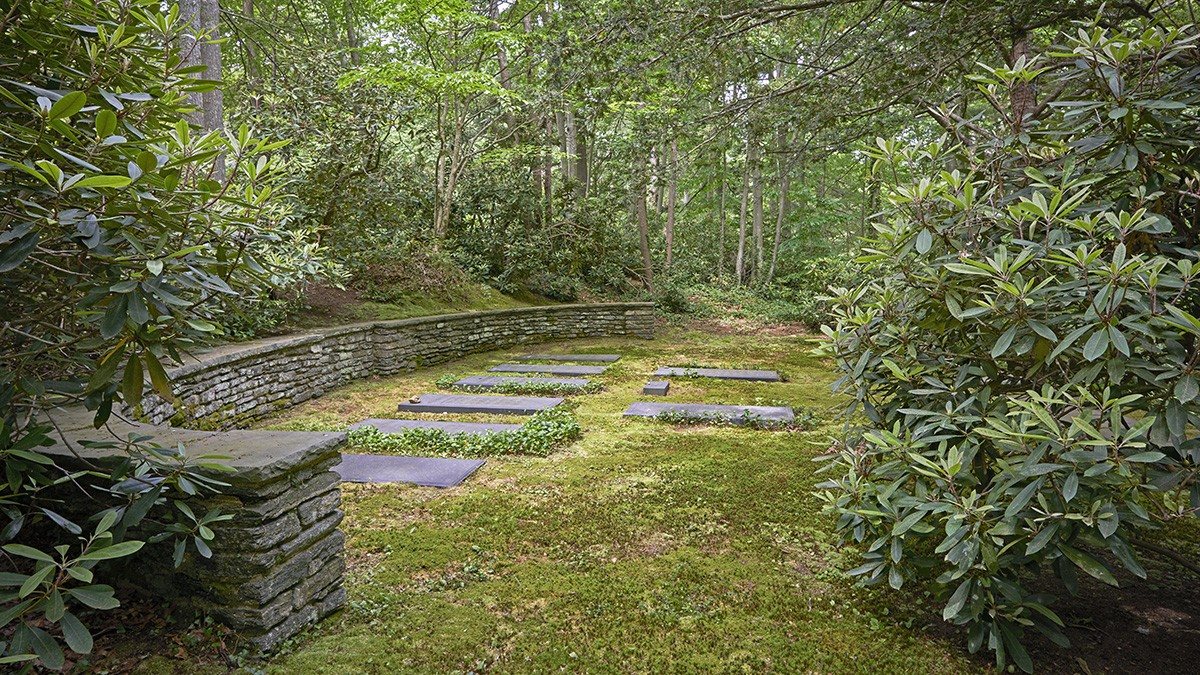
The earliest graves were laid out in lines on the high plateau. When the Olmsted Brothers arrived, they followed the land instead. Drives bend with the hillside, paths follow the contours, and families could commission quiet, wooded plots set apart from their neighbors.
In the late 1940s and 1950s the cemetery added new sections with smaller plots. The mix you see today, grand family rooms beside simple rows of single graves, is part of its character.
Further reading
The Cultural Landscape Foundation has a page on the cemetery, with photographs: tclf.org/landscapes/memorial-cemetery.